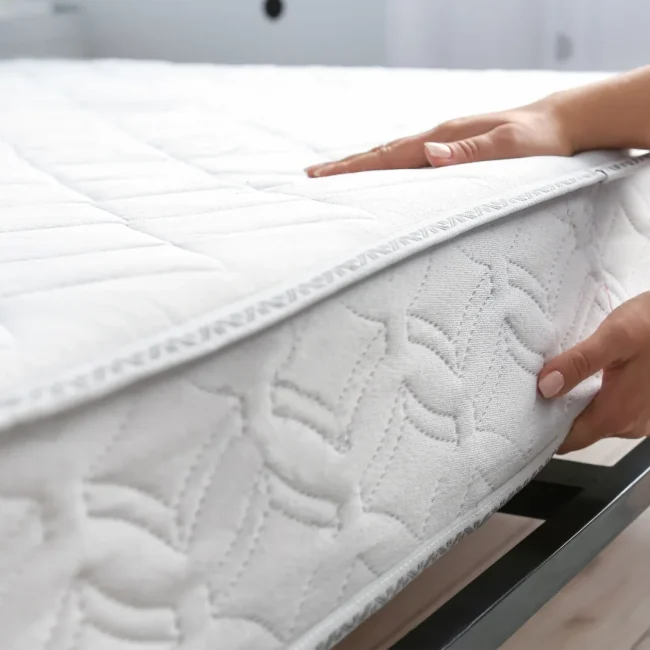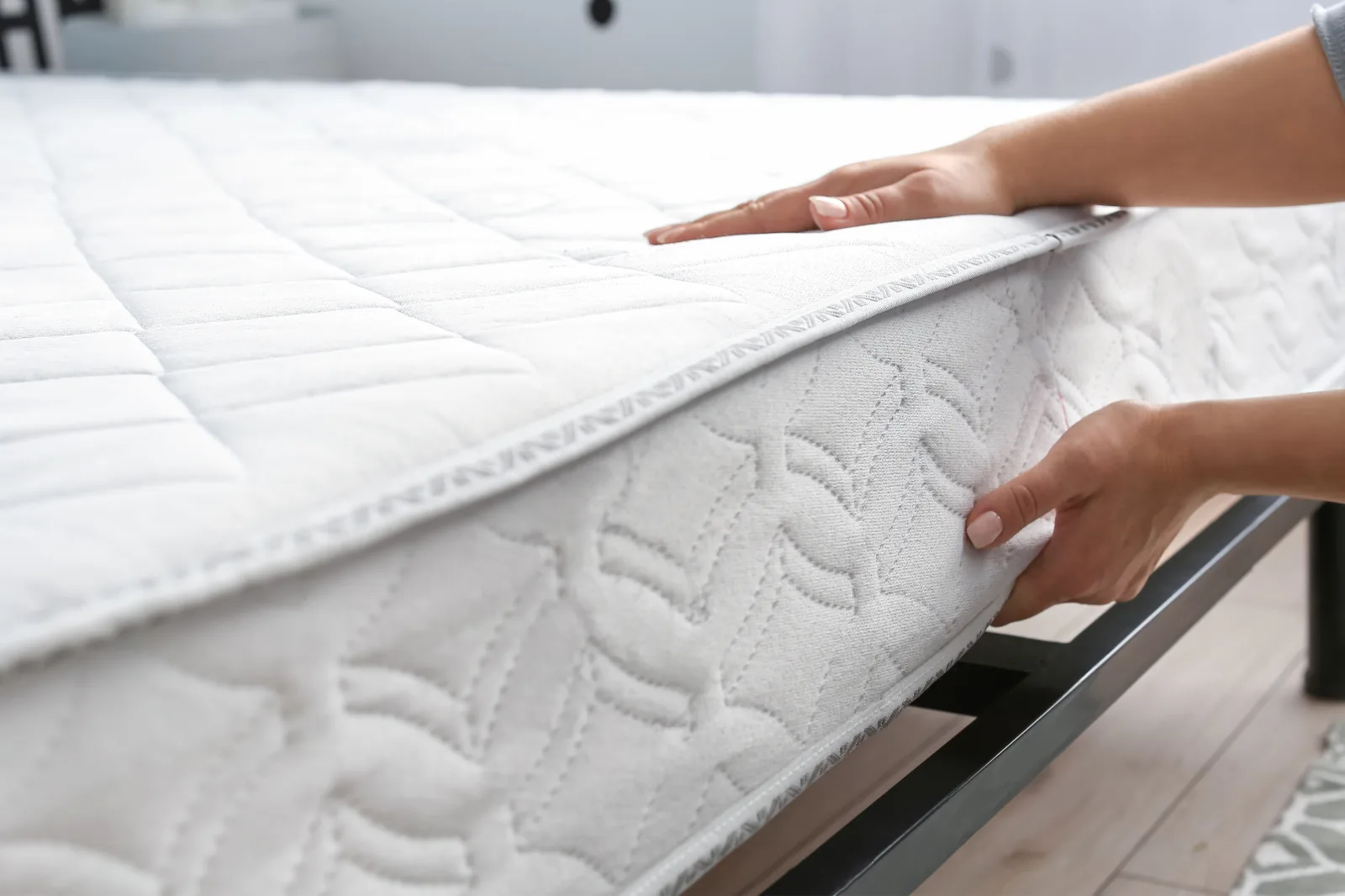
Standing in a showroom pressing your hand into mattress after mattress rarely tells you much on its own.
Firmness is one of the most confusing parts of buying a mattress, mostly because every brand seems to have its own idea of what “medium” actually feels like.
This mattress firmness guide breaks it down properly, so you can shop with a clearer sense of what your body actually needs.
Key Takeaways
- Mattress firmness is usually rated on a 1 to 10 scale, but labels like “medium” or “plush” are not standardised across brands.
- Your ideal firmness depends mainly on sleeping position, body weight and any existing back or joint concerns.
- Firmer is not automatically better for your back. Both overly soft and overly firm mattresses can cause discomfort.
- Testing a mattress in your usual sleeping position for several minutes gives a far more reliable read than a quick sit-down.
What “Firm” Even Means
Mattress firmness describes how a bed feels the moment you lie on it, not necessarily how supportive it will be through the night.
Most manufacturers use a rough 1 to 10 scale. Around 1 to 2 is extra soft, 3 to 4 is soft, 5 to 6 sits in medium territory, 6 to 7 is medium-firm, 8 is firm and 9 to 10 is extra firm.
The tricky part is that this scale is not regulated. A “medium” from one brand can feel noticeably softer or firmer than a “medium” from another.
That’s why relying purely on the label on a mattress tag can lead you astray. It helps to think of firmness as a starting point for comparison, not a fixed guarantee of feel.
Behind the scenes, foam firmness is often measured using Indentation Load Deflection, or ILD. This tests how much force is needed to compress the foam by a quarter of its thickness.
Lower ILD numbers mean softer foam, higher numbers mean firmer foam. You won’t always see this figure quoted in a showroom, but it’s worth asking about if you’re comparing mattresses across different brands.
Firmness by Sleep Position
Your sleeping position changes where your body needs the most support, which is why the same mattress can feel completely different to two people.
Side Sleepers
Side sleepers generally do better on softer to medium mattresses, roughly in the 3 to 6 range.
This allows the mattress to cushion the shoulders and hips, which take on more pressure in this position, while still keeping the spine reasonably level.
Back Sleepers
Back sleepers tend to suit medium to medium-firm mattresses, around 5 to 7 on the scale.
This range helps keep the lower back supported without letting the hips sink too far, which can happen on mattresses that are too soft.
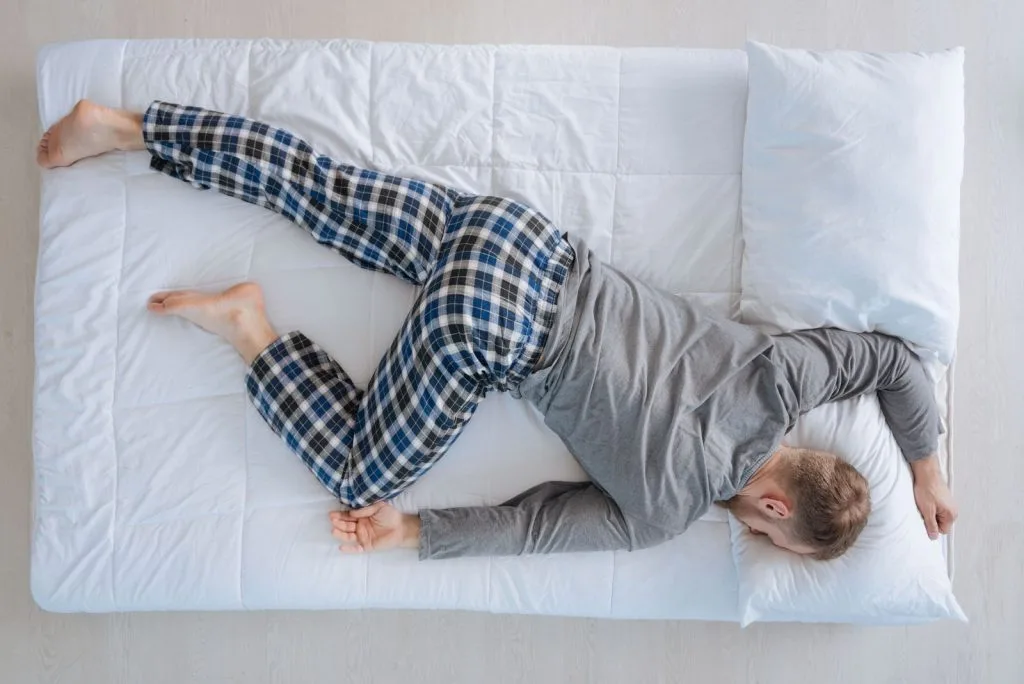
Stomach Sleepers
Stomach sleepers usually need firmer support, somewhere around 6 to 8.
Without enough firmness, the hips can dip into the mattress and pull the spine out of a neutral position, which often shows up as lower back discomfort.
Combination Sleepers
If you shift between positions through the night, a medium firmness around 5 to 6 often works as a reasonable middle ground.
It won’t be perfect for every position, but it avoids the extremes that could cause discomfort in any one of them.
Body Weight Matters Too
Body weight plays a real role in how a mattress feels, because heavier bodies compress foam and springs more than lighter ones.
Lighter sleepers, generally under about 60kg, often find a medium firmness around 5 out of 10 comfortable, going slightly softer if they sleep on their side.
Average weight sleepers, roughly 60 to 80kg, tend to suit something closer to 6 out of 10 as a baseline, adjusted up or down depending on sleep position.
Heavier sleepers, above around 80kg, often need a firmer base, closer to 7 out of 10, since softer mattresses can bottom out and lose their supportive feel more quickly under extra weight.
These are starting points rather than fixed rules. Two people of similar weight can still prefer different firmness levels depending on comfort preference and any joint or back issues.
| Sleeper Profile | Typical Firmness Range | Why |
|---|---|---|
| Lightweight side sleeper | 3 to 5 | Needs cushioning at shoulders and hips |
| Average weight back sleeper | 5 to 7 | Balances lumbar support with comfort |
| Heavier stomach sleeper | 7 to 8 | Prevents hips sinking out of alignment |
| Combination sleeper, any weight | 5 to 6 | Reasonable compromise across positions |

Firmer Isn’t Always Better for Back Pain
There’s a persistent idea that a rock-hard mattress is best for back pain. It’s more nuanced than that.
A mattress that’s too firm can create pressure points at the shoulders and hips, particularly for lighter or side-sleeping individuals, which can actually worsen discomfort rather than ease it.
On the other hand, a mattress that’s too soft can let the spine sag out of a neutral position, especially for back and stomach sleepers.
Many sleep specialists point to medium-firm mattresses as a reasonable starting point for people managing general back pain, since they tend to balance contouring with support.
If you’re managing a specific condition such as arthritis, sciatica or a previous injury, it’s worth checking with your physiotherapist or doctor before settling on a firmness level, since their advice may point you towards something more specific.
Sharing a Bed With Different Preferences
Couples with different firmness preferences face a common dilemma, and there’s no single fix that works for everyone.
- Meet in the middle. A medium firmness often satisfies both a soft and firm preference reasonably well, even if it’s not perfect for either person.
- Consider zoned or hybrid designs. Some mattresses combine different comfort layers to offer slightly different support across the surface.
- Test together, not separately. Lying down side by side in your usual positions for several minutes gives a much better sense of compromise than testing alone.
Test Firmness Properly In-Store
A quick press with your hand tells you almost nothing useful. Your body needs time to settle before you can judge a mattress properly.
- Lie down in your normal sleeping position for at least ten minutes, not just a few seconds.
- Slide a hand under your lower back. Too much gap suggests the mattress may be too firm for you, while no gap at all can mean it’s too soft.
- Turn onto your side, back and stomach if you tend to shift positions overnight.
- Check how easily you can move without feeling stuck or overly cushioned.
- If you’re testing as a couple, both people should lie down together to check for motion transfer and shared comfort.
Because firmness labels vary so much between brands, this hands-on approach matters more than trusting the tag alone. If a retailer offers a trial period at home, that can also help you fine-tune your choice once the mattress is in your actual sleep environment.
Find Your Ideal Firmness Today
Choosing a mattress firmness isn’t about chasing a trend or assuming firmer always wins. It comes down to your sleeping position, your body weight and how your back feels each morning.
At V Seng Furniture, our range includes mattresses from established brands across different firmness levels, from plush comfort to firmer support, so you can compare options side by side rather than guessing from a label.
Visit one of our showrooms in Menjalara, Rawang, Cheras or Seremban to test mattresses in person, or speak with our team about which firmness range might suit your sleep needs.
With a 100-night trial on mattresses, you can settle into your choice at home before deciding it’s the right one for you.